
The world is changing quickly. Technology is growing fast, societies are becoming more connected, and people are facing new global challenges. Because of these changes, many thinkers and innovators are exploring new ideas about how society should work in the future. One emerging concept that reflects this shift is newtopy.
Newtopy represents a modern response to traditional utopian ideas. In the past, utopian visions often described perfect societies where problems such as poverty, inequality, and conflict no longer existed. These ideas were inspiring, but many of them ignored real-world challenges.
Newtopy takes a different approach. Instead of imagining a perfect world without problems, newtopy focuses on building better systems that can realistically improve society. It accepts that challenges will always exist but believes that innovation, cooperation, and smart solutions can help people create a more balanced and sustainable future.
The concept of newtopy combines social awareness, technological progress, and modern strategic thinking. It encourages people to rethink how communities function, how governments operate, and how technology can support human well-being.
In recent years, discussions around newtopy have grown in fields such as digital innovation, urban development, sustainability, education, and global collaboration. Many experts believe that ideas similar to newtopy will influence the way societies evolve during the next several decades.
This comprehensive guide explains everything about newtopy. It explores the origins of the concept, its philosophy, its connection to modern innovation, and its potential impact on the future of society.
Understanding the Meaning of Newtopy
The word newtopy combines two important ideas. The first part, “new”, represents change, progress, and modern thinking. The second part is connected to the idea of utopia, which traditionally describes an ideal society.
However, newtopy does not aim to create a perfect society that ignores reality. Instead, it focuses on designing systems that work better within real-world conditions.
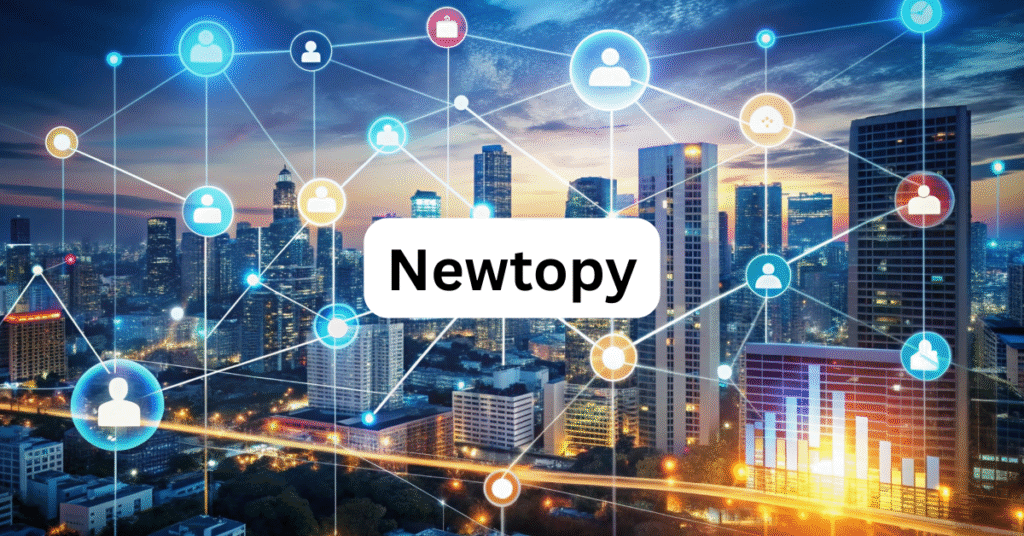
In simple terms, newtopy represents a modern vision of society that recognizes current challenges while encouraging innovative solutions. It suggests that progress should come through practical improvements rather than unrealistic perfection.
The idea behind newtopy is that societies can become better by combining technology, creativity, collaboration, and responsible leadership.
Also read:David Borhaz: A Rising Innovator Connecting Technology, Entrepreneurship, and Community Development
Unlike older utopian ideas that imagined fixed ideal worlds, newtopy promotes continuous improvement. It supports the idea that society should constantly evolve and adapt to new circumstances.
This flexible approach makes newtopy especially relevant in the modern digital age.
The Historical Roots of Utopian Thinking
To fully understand newtopy, it helps to examine the history of utopian ideas.
For centuries, philosophers and writers imagined ideal societies where people lived in harmony. These visions often appeared during times of social change when people were searching for better ways to organize communities.
Many classical utopian concepts focused on equality, shared resources, peaceful communities, and strong moral values.
While these ideas inspired important conversations, many critics argued that traditional utopias were unrealistic. They often ignored human diversity, economic complexity, and political challenges.
As the world became more interconnected and technologically advanced, new ways of thinking began to emerge. People started exploring ideas that were more flexible and grounded in real-world conditions.
Newtopy reflects this modern shift. It builds on the inspiration of earlier utopian visions while adapting them to today’s complex global environment.
Why Newtopy Is Relevant in the Modern World
The modern world faces many major challenges. These include climate change, economic inequality, political division, technological disruption, and rapid urbanization.
Traditional solutions sometimes struggle to address these complex issues. As a result, many thinkers are exploring new frameworks that encourage creative problem-solving.
Newtopy is relevant because it promotes a balanced approach. Instead of seeking unrealistic perfection, it focuses on gradual improvement and innovation.
For example, newtopy encourages communities to use technology responsibly while also protecting social values and human well-being.
It also supports collaboration between governments, businesses, researchers, and citizens to solve shared problems.
This cooperative approach reflects the realities of modern society, where global challenges often require collective action.
Core Principles of Newtopy
The concept of newtopy is built around several key principles that guide its vision for the future.
Innovation
Innovation plays a central role in newtopy. Modern technologies can help solve many social and economic problems when used responsibly.
Advances in artificial intelligence, renewable energy, healthcare technology, and digital communication have the potential to improve lives around the world.
Newtopy encourages societies to adopt these technologies while carefully managing their risks.
Sustainability
Sustainability is another important element of newtopy. Future societies must balance economic development with environmental protection.
This includes using renewable energy, reducing pollution, protecting natural resources, and designing cities that support healthy living.
Social inclusion
Newtopy also emphasizes social inclusion. A successful society must ensure that opportunities are available to all people regardless of background or income.
Education, healthcare, and economic participation should be accessible to everyone.
Adaptability
Unlike traditional utopian ideas that described fixed perfect societies, newtopy promotes adaptability. Societies must remain flexible and ready to adjust to changing conditions.
Continuous learning and improvement are essential for long-term success.
Human-centered design
Technology and policy should always prioritize human well-being. Newtopy encourages systems that improve quality of life rather than simply increasing efficiency or profit.
The Role of Technology in Newtopy
Technology plays a major role in shaping modern societies. From communication networks to digital economies, technology influences almost every part of daily life.
Also read:Mytscvisit.com: The Complete Guide to the Tropical Smoothie Cafe Customer Survey Platform
Newtopy recognizes the power of technology but also emphasizes responsible innovation.
Digital tools can improve healthcare, education, transportation, and environmental monitoring. For example, smart cities use technology to manage traffic, reduce energy consumption, and improve public services.
Artificial intelligence can help analyze complex data and support better decision-making in areas such as climate science and urban planning.
However, newtopy also highlights the importance of ethical technology development. Privacy protection, digital security, and fair access to technology must remain priorities.
Balancing technological progress with social responsibility is a key part of the newtopy vision.
Newtopy and Sustainable Development
Sustainable development is closely connected to the philosophy of newtopy.
The modern world faces growing environmental challenges such as climate change, deforestation, water shortages, and pollution. These issues affect both natural ecosystems and human communities.
Newtopy encourages societies to adopt sustainable practices that protect the environment while supporting economic growth.

Examples include renewable energy systems, green architecture, sustainable agriculture, and efficient transportation networks.
These solutions demonstrate how innovation can support both environmental protection and economic opportunity.
By combining sustainability with modern technology, newtopy offers a realistic path toward long-term global stability.
Newtopy and Urban Innovation
Cities are becoming the center of global economic and cultural activity. Today, more than half of the world’s population lives in urban areas, and this number continues to grow.
Urban development therefore plays a critical role in the newtopy concept.
Smart city technologies can improve public transportation, energy efficiency, waste management, and emergency services.
Urban planners are also exploring ways to create more livable environments by increasing green spaces, improving public transportation, and designing pedestrian-friendly neighborhoods.
These innovations demonstrate how cities can evolve into more sustainable and efficient communities.
Newtopy encourages urban leaders to experiment with creative solutions that improve the quality of life for residents.
Education and the Newtopy Vision
Education is one of the most powerful tools for building better societies.
Newtopy emphasizes the importance of lifelong learning and adaptable education systems. In a rapidly changing world, people must continuously develop new skills.
Digital learning platforms, remote education technologies, and collaborative research networks are expanding access to knowledge.
Education systems inspired by newtopy focus not only on academic knowledge but also on critical thinking, creativity, and ethical responsibility.
By preparing individuals to adapt to new challenges, education becomes a foundation for long-term social progress.
Economic Systems in a Newtopy Framework
Economic innovation is another important aspect of newtopy.
Traditional economic models sometimes prioritize short-term profit over long-term sustainability. Newtopy encourages economic systems that balance growth with social responsibility.
Examples include:
social entrepreneurship
sustainable investment strategies
ethical business practices
community-focused economic development
These approaches aim to create economies that benefit both businesses and communities.
Newtopy supports the idea that economic success should improve overall societal well-being rather than benefiting only a small portion of the population.
Global Collaboration and the Newtopy Approach
Many modern challenges are global in nature. Climate change, public health crises, and technological regulation require international cooperation.
Newtopy encourages global collaboration between nations, institutions, and communities.
Also read:Hormita: The Ultimate Guide to a Hidden Natural Paradise and Its Unique Ecosystems
International partnerships allow researchers and policymakers to share knowledge, resources, and innovative solutions.
Global cooperation also promotes cultural understanding and peaceful relationships between nations.
By encouraging collaboration rather than competition, newtopy supports a more stable and cooperative global environment.
Criticisms and Challenges of the Newtopy Concept
Like any emerging idea, newtopy also faces criticism and debate.
Some critics argue that the concept is too broad and lacks clear definitions. Others believe that implementing large-scale societal changes may be difficult due to political and economic barriers.
Another challenge involves balancing technological innovation with ethical considerations. New technologies can bring both benefits and risks.
Despite these challenges, many experts believe that the principles behind newtopy provide a useful framework for discussing the future of society.
The concept encourages open dialogue about how communities can adapt to modern challenges while preserving important social values.
Why Newtopy Is More Than a Trend
Newtopy is not just a temporary idea. It reflects a deeper change in how people think about progress.
It moves away from fast, shallow innovation and focuses on meaningful growth.
As global challenges continue, the need for responsible and balanced systems will grow.
Newtopy provides a clear path forward.
The Future Potential of Newtopy
As technology continues to evolve and global challenges become more complex, ideas similar to newtopy may play a larger role in shaping public discussions about the future.
The concept encourages societies to remain optimistic while also acknowledging real-world difficulties.
By focusing on innovation, sustainability, inclusion, and adaptability, newtopy offers a balanced vision for progress.
Instead of promising a perfect world, it encourages people to work together to create better systems step by step.
This practical approach may help guide future policies, technologies, and social initiatives.
Frequently Asked Questions About Newtopy
What is newtopy?
Newtopy is a modern concept that reimagines traditional utopian ideas by focusing on realistic improvements, innovation, sustainability, and social progress.
How is newtopy different from utopia?
Traditional utopia describes a perfect society without problems. Newtopy focuses on practical solutions that improve society while recognizing real-world challenges.
Why is newtopy important today?
Newtopy is important because modern societies face complex issues such as climate change, technological disruption, and economic inequality. The concept encourages innovative approaches to solving these problems.
Does newtopy involve technology?
Yes. Technology is an important part of newtopy because it can support better healthcare, education, environmental protection, and communication systems.
Can governments apply newtopy ideas?
Governments can use newtopy principles when designing policies related to sustainability, innovation, urban planning, and social inclusion.
Is newtopy only a theoretical concept?
Although newtopy is still developing as an idea, many real-world initiatives already reflect similar principles, including smart cities, green technology projects, and social innovation programs.
Final Thoughts on Newtopy
The idea of newtopy reflects a growing recognition that the future of society must balance innovation with responsibility. While traditional utopian visions imagined perfect worlds, newtopy focuses on practical progress.
By encouraging creativity, sustainability, social inclusion, and technological responsibility, the concept offers a modern framework for addressing global challenges.
As societies continue to evolve, the principles behind newtopy may inspire new ways of thinking about governance, technology, education, and community development.
Rather than seeking perfection, newtopy encourages continuous improvement. This realistic and adaptable approach may help guide humanity toward a more balanced and hopeful future.